Why Assemblies Alone Aren’t Enough
Assemblies are great. But…
You cannot change a system until you transform the mindsets of the people who are enacting that system.
If you just tinker around with new structures or new processes, but the mindset of the people hasn’t changed – the way we think, the way we connect with each other – then the same people in a new structure re-enact the same old problems.
So we don’t think assemblies, on their own, will work.
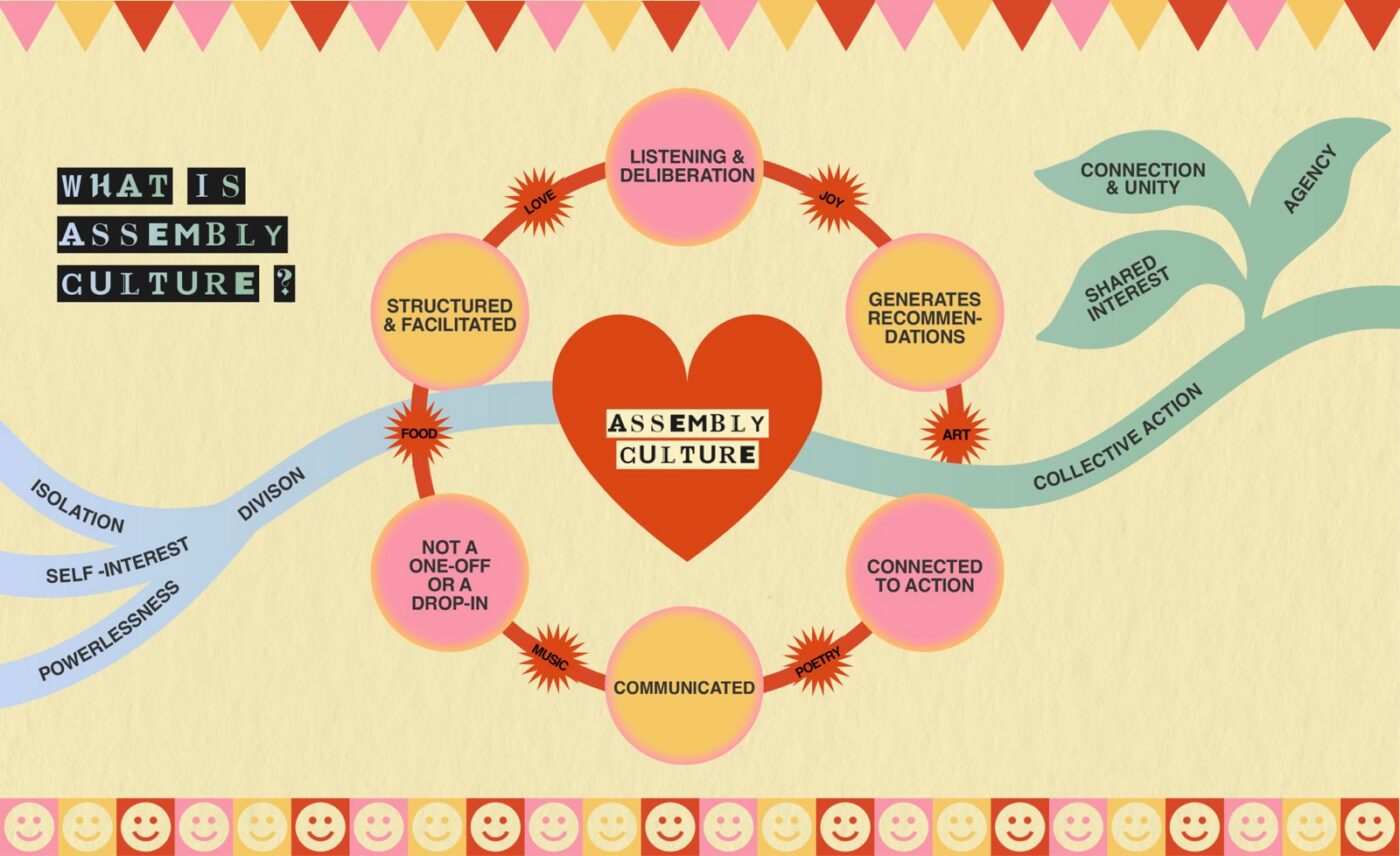
We also need to create assembly culture – a culture of love, respect and empathy and a shared sense of power and possibility – that spreads outwards from each assembly.
Deep down, I think that people care about each other and want the best for each other.
But that’s not always what we see.
So how do we bring out this best in people?
It starts with listening
A big part of it comes down to listening.
When you hear, not just what people think, but why they think it, then something changes.
You get to understand people at a deeper level – the different journeys through life that led each of us to where we are now.
So what is assembly culture?
Assembly culture is:
Fostering empathy and connection through activities that bring people together.
It’s understanding that we might not always agree, but we don’t let that get in the way of us doing stuff together.
It’s a culture of taking action together.
A culture of learning, through coming together to think about what we did and how it went.
It means placing trust in ordinary people, who:
- are experts in their own lives
- can think as well as, if not better than, politicians
- can come to agreements for the common good
More than an event
Humanity Project supports community organisers to run assemblies in their neighbourhoods across the UK.
The assemblies are a few hours long, and they are joyful events, including food and some form of creativity – poetry, music and art.
At the centre are deliberation groups, where people gather in small groups for guided discussions, and really listen to each other about the issues affecting their community, and together decide how to take action and shape the future.
It’s about building a new kind of democracy from the ground up.
Show, don’t tell
We’ll have to build this culture of empathy, trust, learning and action in ourselves and in our own teams before we can take it out to others.
Show, don’t tell.
A fundamental part of what Humanity Project Assemblies are about is actively bringing to life a new culture.