
Assembly Culture in 2025: from participation to power
What Humanity Project is building and what comes next
By Nick Gardham, December 2025 – first published on LinkedIn
The systems that hold the levers of power to effect change for those who find themselves on the margins have proven, time and time again, to be ineffective.
Grassroots organising has taken groups so far. In many cases, it has helped make life more bearable for people by seeking to alleviate immediate symptoms. It is a starting point, not an end point.
As communities have become organised, they have often come up against an impenetrable state and system – one where, at times, even those with power seem unable to make the changes that are needed.
We need to find a new way of doing things. A new way of making democracy work. A new way that can address inequalities for people, in places, and for the planet.
What we’ve been trying this year
This year, Humanity Project has tried something.
We’ve worked to build a bottom-up people’s movement, inspiring people to become more involved in understanding the world around them.
We’ve focused on building the conditions for people to come together well, using creativity, shared activity and skilled listening and facilitation to help people feel able to show up, be heard, and begin making sense of the challenges they face together.
From relational power to shared power
This relational power – the power of people coming together – needs to find ways to break through the impenetrability of institutional and unilateral power that can effect change.
That means moving beyond protest, pressure or consultation alone, and finding practical ways for community power and institutional power to work together.
To do this, we need to understand how these forms of power can work together. Not co-opted nor coerced, but working cooperatively and collaboratively, in genuine relationship.
Humanity Project is part of a wider movement of people seeking more participatory forms of politics. Our specific focus is on building assembly culture – the skills, confidence and local legitimacy that make participation meaningful and lasting, and on exploring how this relational power can work alongside institutional power.
In January, we will begin a conversation on co-governance, bringing together policymakers, funders and practitioners from the UK and the US to explore how these forms of power can work together in practice.
It’s not going to be quick. Nor is it going to be easy. We have decades of work to learn from, and decades of entrenched systems to reweave.
Taking the long view

The challenge we face today is rebuilding a sense of collective power after decades that have prioritised individual solutions over neighbourhood and community strength.
If history has taught us anything, it’s that building fairer, more democratic systems takes time. It requires patience, trust and a willingness to keep learning – especially when the work feels slow or uncertain.
But collectively, the seeds have been sown. We may not be as small as we once were, but as Margaret Mead once said:
“A small group of thoughtfully committed citizens can change the world. Indeed, it’s the only thing that ever has.”
What we’ve built together
None of this has happened in isolation.
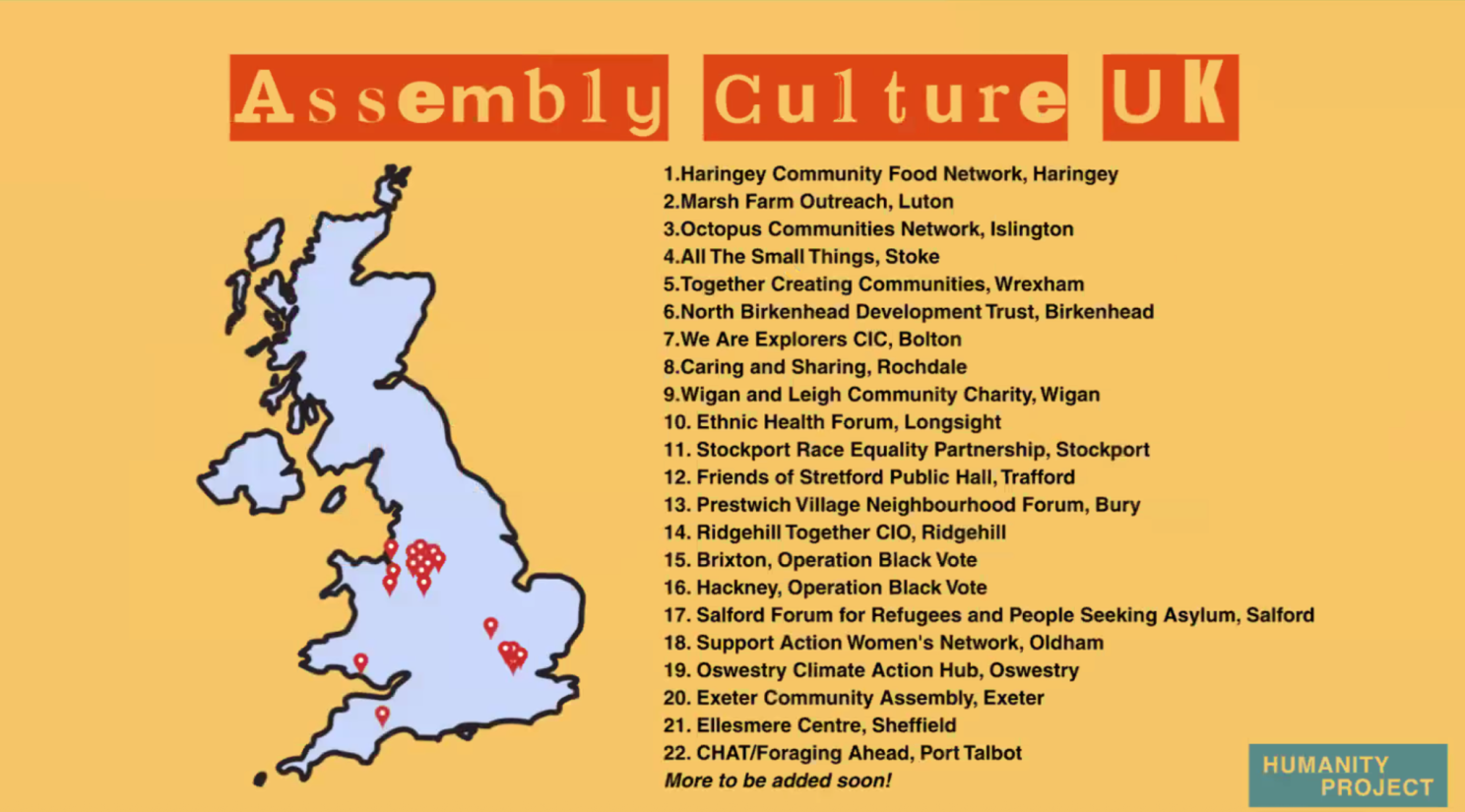
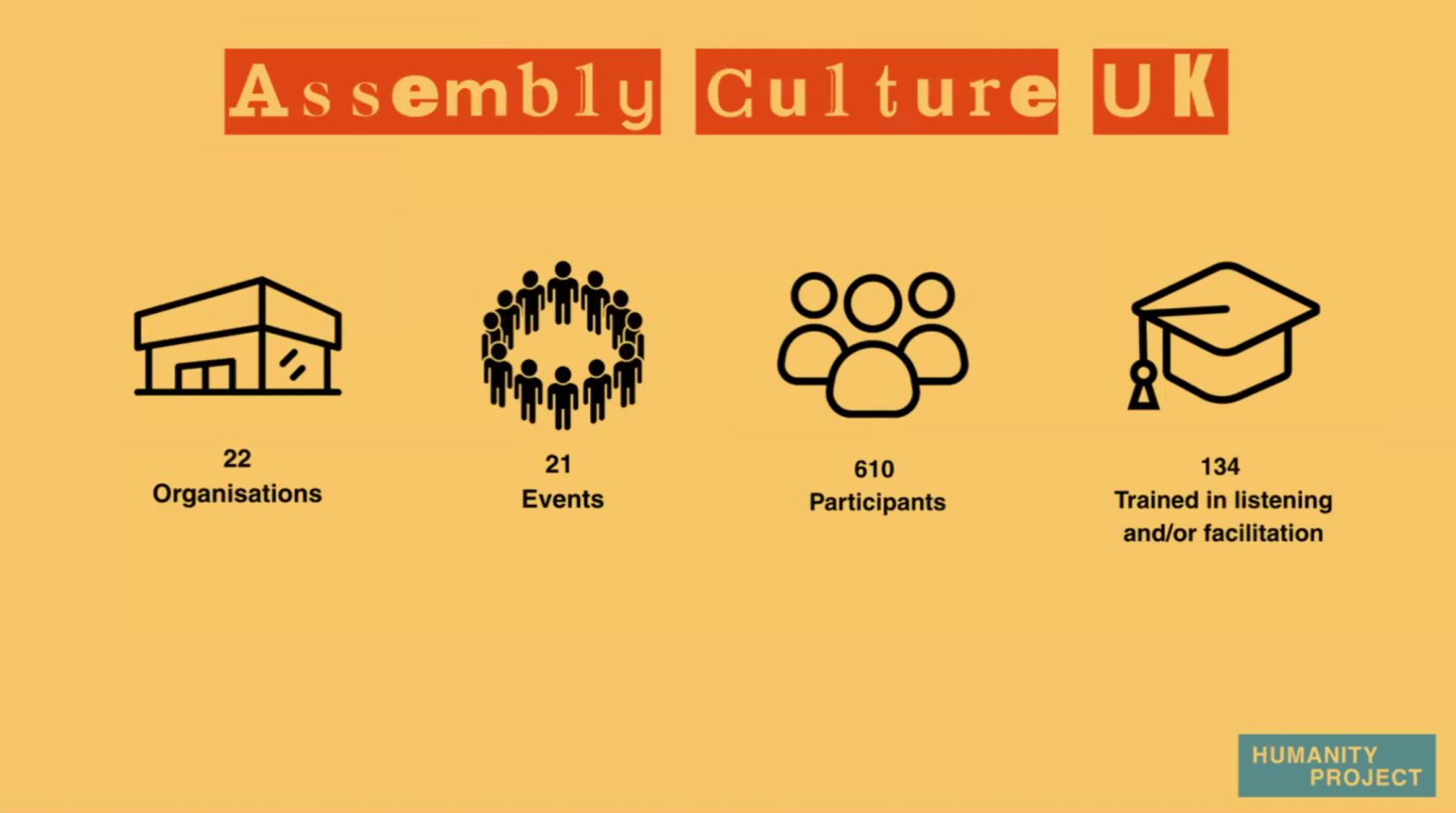
This year, Humanity Project has worked alongside 22 partner organisations, supporting assemblies across 10 areas of the country. Together, we’ve helped make 21 assemblies happen with 610 participants, and trained 134 facilitators to grow in confidence and skill – people now able to hold spaces where listening, dignity and shared decision-making can take root.
We’re deeply grateful to every partner, facilitator, organiser and participant who has taken part. What’s been built this year belongs to all of you.
Looking ahead
This work doesn’t stop here.
Assemblies with teeth
In the year ahead, many more assemblies are already planned. Humanity Project will continue to support, train and inspire communities to build their own assemblies, rooted in local realities, while building the confidence, legitimacy and critical mass needed for community power to engage meaningfully with institutional power to address the issues that matter most where people live.
Creativity and culture at the heart of the process
We’ll also deepen the creative side of this work. Our Of Love workshop series – including Recipes of Love and Fabric of Love – will continue to grow, with more shared practices and practical resources, including cookbooks and creative blueprints, so others can adapt and use these approaches in their own places.
Sharing more stories, tools and resources
Alongside this, we’ll be launching a new Humanity Project website, sharing more case studies and stories from across the country, as well as clearer tools and frameworks to help others take part and get started.
This is about building something together, with care, that helps make politics work better where we live.
It’s already happening.
Thank you for being part of this work this year. We’re glad you’re with us.