Neighbourhood Assemblies: A New Model for Neighbourhood Governance
The English Devolution and Community Empowerment Act has created a once-in-a-generation opportunity to reshape the relationship between people and power at neighbourhood level.
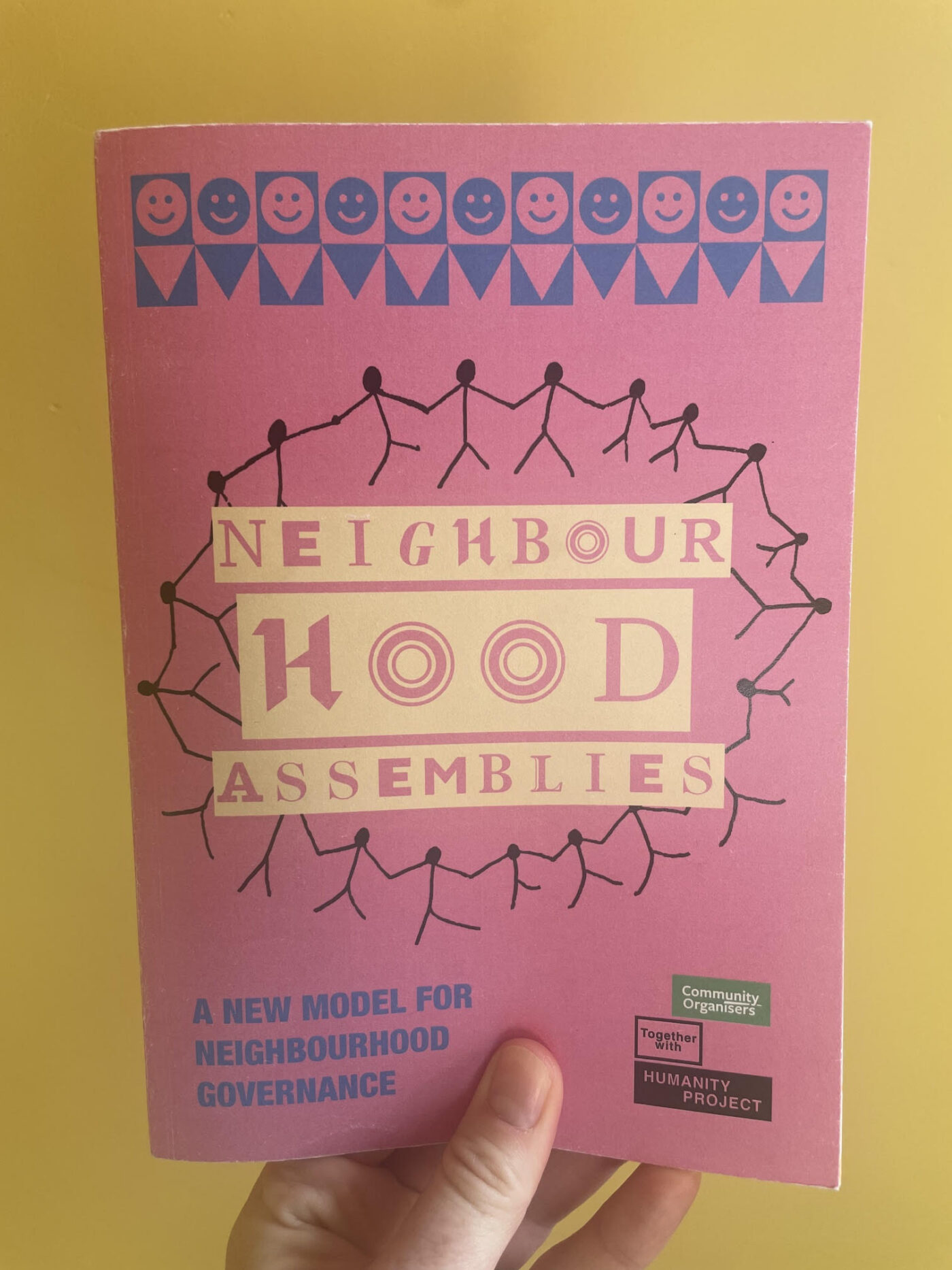
As local authorities, communities and elected representatives consider what neighbourhood governance should look like in practice, the team here at Humanity Project along with our colleagues at Community Organisers have published a new report: Neighbourhood Assemblies: A New Model for Neighbourhood Governance.
The report sets out the case for Neighbourhood Assemblies as a model for community empowerment under the Act.
At its heart is a simple question: How do we ensure power is shared with communities themselves, rather than simply devolved between institutions?
>> Download the report here (PDF)
Why this matters
Across the UK, people are increasingly disconnected from decision-making. Recent polling shows that 84% of people feel they have little or no control over important decisions affecting their neighbourhoods.
The English Devolution and Community Empowerment Act creates an opportunity to respond to this challenge by strengthening neighbourhood governance. But the opportunity will only be realised if residents themselves are placed at the centre of decision-making.
What are Neighbourhood Assemblies?
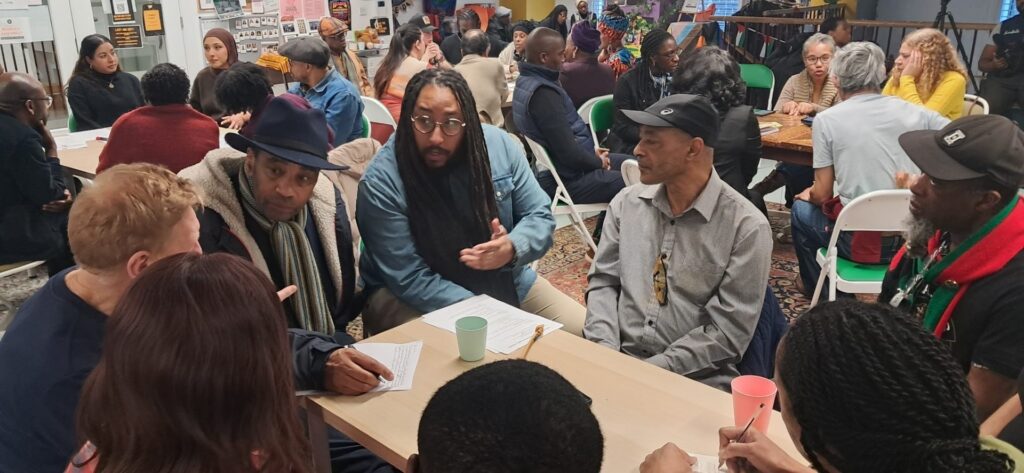
Neighbourhood Assemblies are community-led spaces where residents come together to listen, deliberate, make decisions and take action on the issues that matter where they live.
Organised by local residents and community organisations, assemblies are shaped by listening campaigns, connected to ongoing action and designed to give communities a meaningful role in shaping local priorities, budgets and resources.
Unlike consultation exercises or one-off engagement events, they form part of a continuous cycle of listening, assembly and action.
Communities are already showing what’s possible
This model is not theoretical.
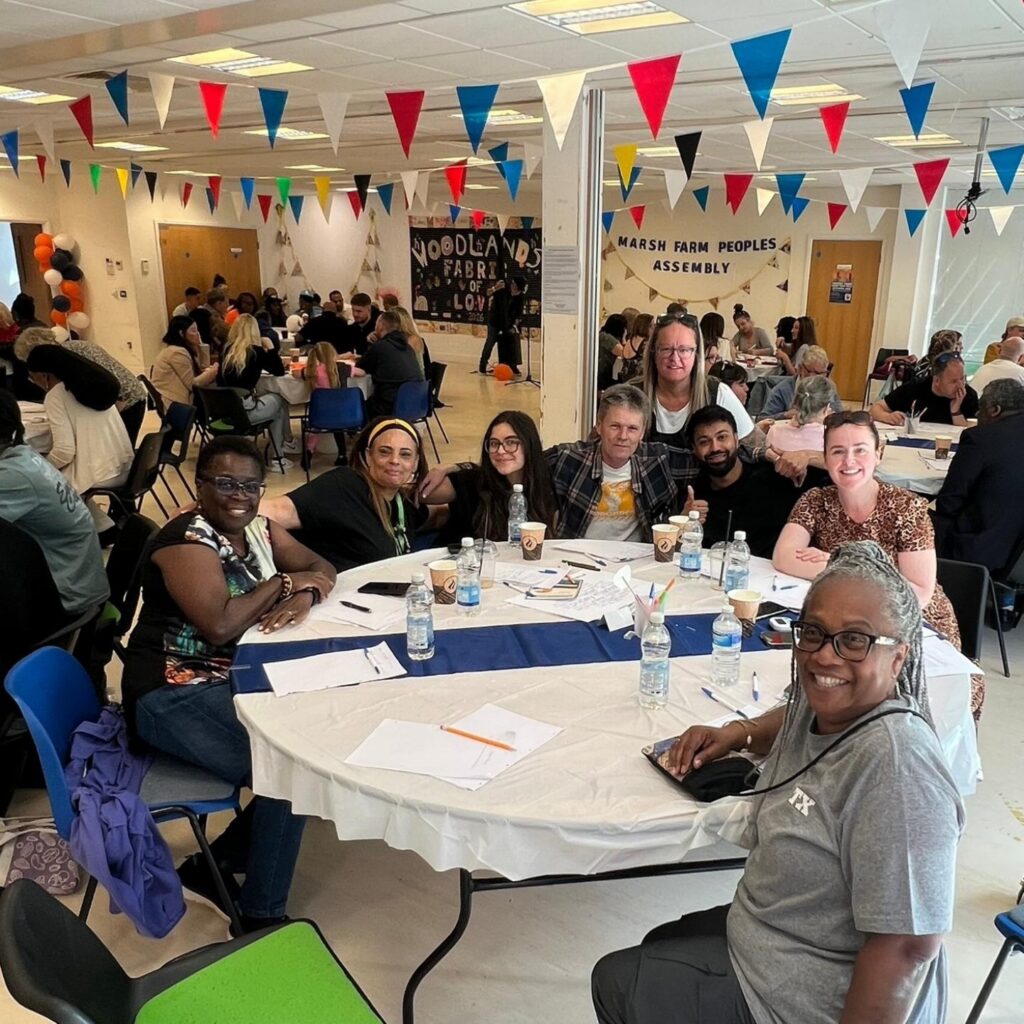
Between December 2023 and June 2024, Humanity Project supported 46 assemblies across 34 neighbourhoods, involving around 1,720 participants and training more than 200 people in facilitation and organising.
The report highlights the Marsh Farm People’s Assembly in Luton, where nearly 200 listening conversations led to an assembly attended by more than 150 residents. One of the assembly’s priorities – bringing back the Marsh Farm Market – received a commitment from the council within days.
The report also draws on learning from communities including Wrexham, Islington, Haringey, Oswestry, Sheffield and from groups in all 10 boroughs across Manchester.
Key recommendations
The report recognises that a range of neighbourhood governance models can play a valuable role, including Area Committees, Parish Councils and Community Covenants.
However, it argues that Neighbourhood Assemblies offer something distinct: they place residents themselves at the centre of listening, priority-setting and action.
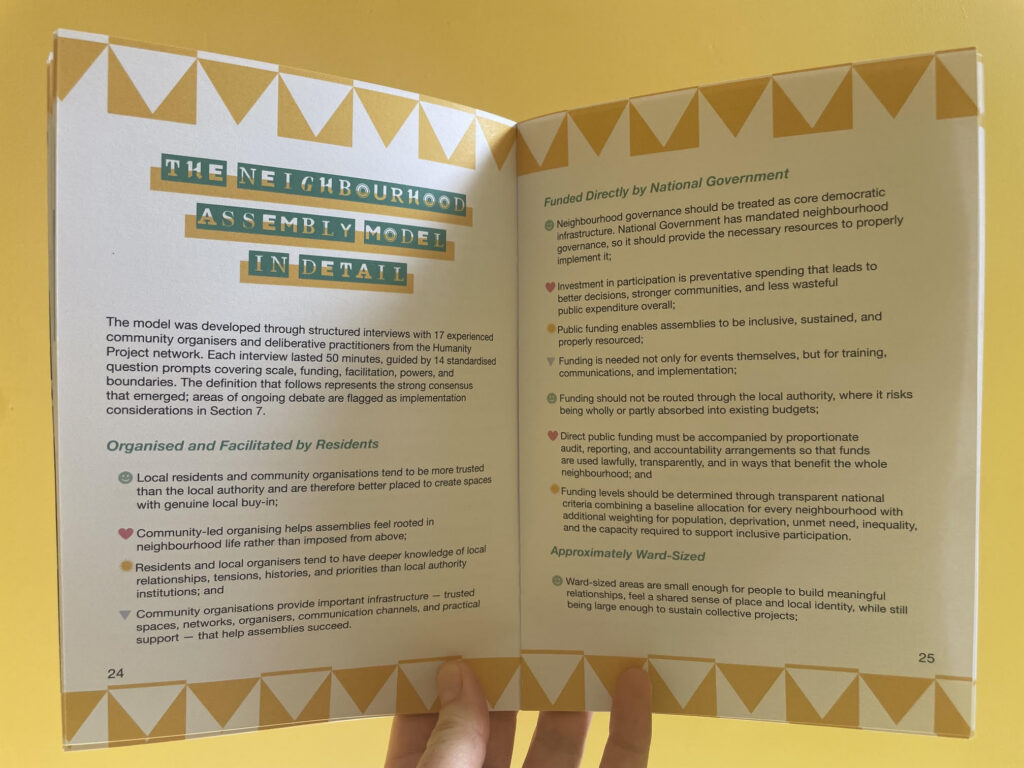
Recommendations include:
- Recognising Neighbourhood Assemblies within forthcoming neighbourhood governance regulations
- Supporting Pride in Place Boards and other neighbourhood governance structures to work with assemblies
- Applying a clear community power test to neighbourhood governance arrangements
- Funding assemblies as democratic infrastructure
- Piloting and evaluating assemblies at scale
Taking the model to Parliament
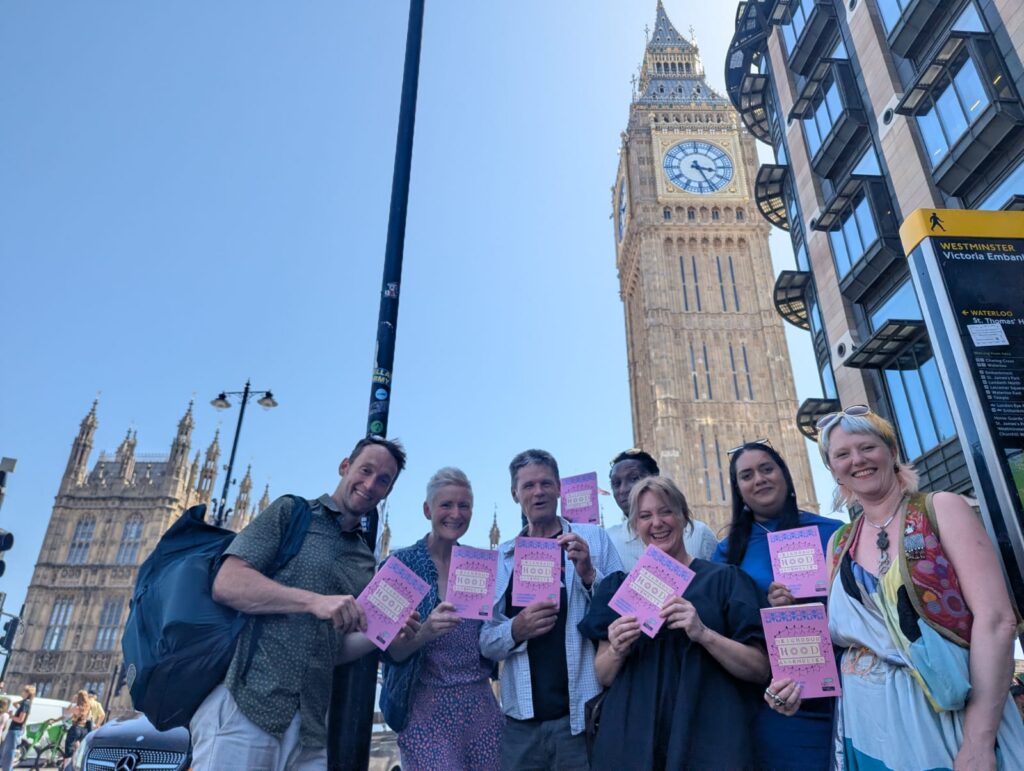
Our report was first presented at a House of Commons roundtable on 23rd June 2026, hosted with the support of Clive Lewis MP and Bell Ribeiro-Addy MP.
The discussion brought together MPs, Humanity Project conveners Clare Farrell and Nick Gardham, alongside community organisers and practitioners from across the Humanity Project network.
Drawing on practical experience from communities across England and Wales, the conversation explored how residents can play a more meaningful role in shaping the decisions, priorities and resources that affect their lives.
What was clear from the discussion is that there is a tremendous opportunity to build new relationships between communities, public institutions and elected representatives – and to learn from places already showing what’s possible.
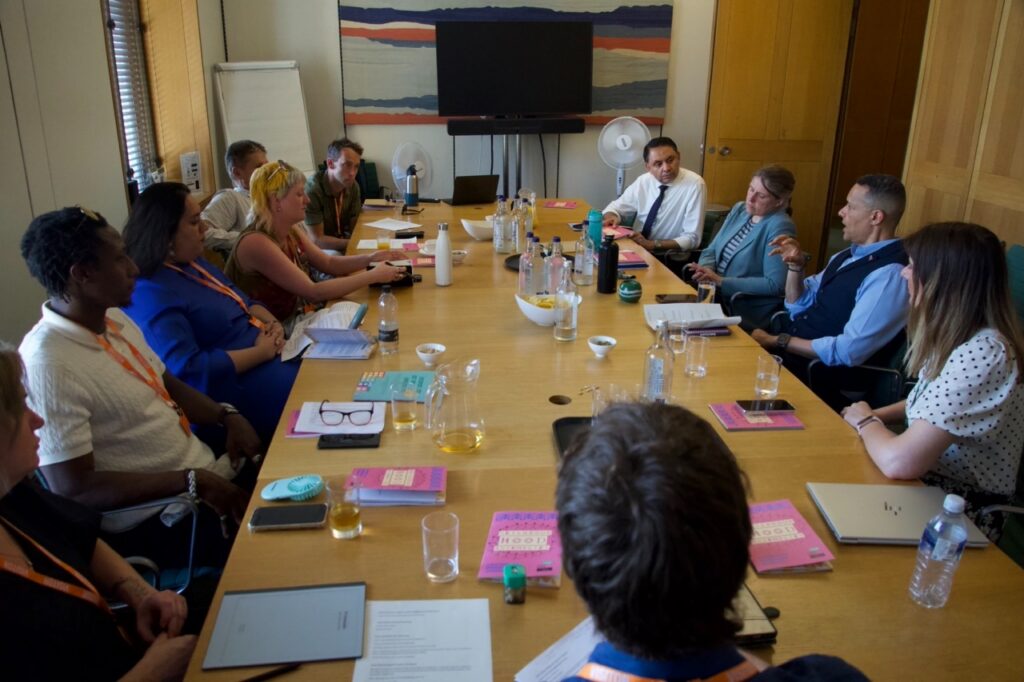
Download the report
Read Neighbourhood Assemblies: A New Model for Neighbourhood Governance and explore the full findings and recommendations.
>> Download the report here (PDF)
Join our webinar – 14 July 2026
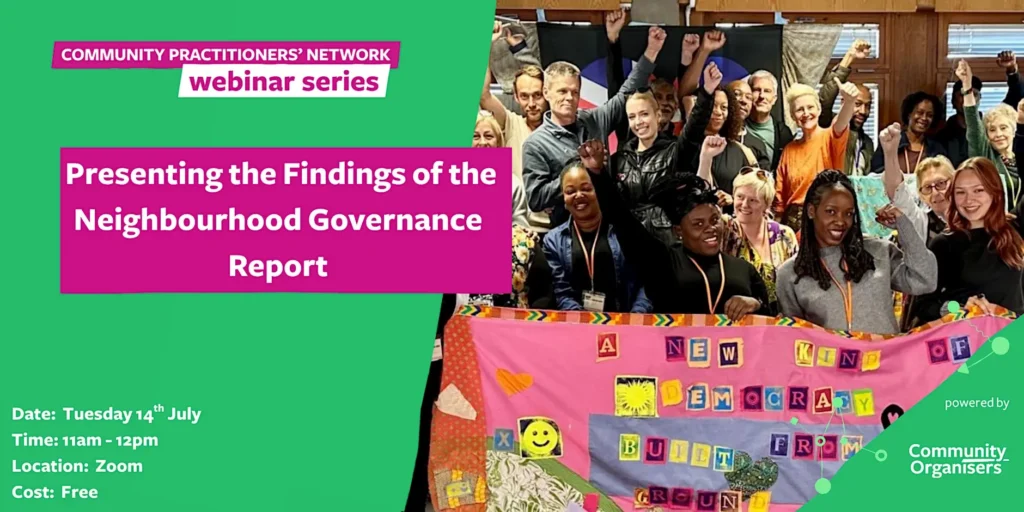
We’ll be presenting the findings of the report, sharing learning from communities already putting these ideas into practice, and discussing what happens next.
Register here >> https://www.eventbrite.co.uk/e/presenting-the-findings-of-the-neighbourhood-governance-report-tickets-1991694332363
Continue the conversation
If you’re exploring neighbourhood governance, community empowerment or the opportunities created by the English Devolution and Community Empowerment Act, we’d love to discuss how the learning from this report could inform your work.
Whether you’re a community organisation, local authority, elected representative, neighbourhood board or funder, please contact Ruth Rogers at ruth@humanityproject.uk.
With gratitude
Our thanks go to Clive Lewis MP, Bell Ribeiro-Addy MP, John McDonnell MP, Shockat Adam MP and Cat Eccles MP, Rachael Maskell MP and Tim Davies (Chief of Staff to Simon Opher MP) for approaching the discussion with such curiosity, openness and a genuine willingness to learn from the experiences of communities already putting these ideas into practice.
We’re also hugely grateful to our partners Glenn Jenkins (Marsh Farm Outreach), Ruth Marshall (Together Creating Communities, Wrexham), Moussa (Haringey Community Food Network), and Ruby Bukhari, independent community leader for Brixton, whose experience, insights and stories from the ground brought the report to life and demonstrated what’s possible when communities are trusted to shape their own future.
Finally, thank you to everyone across the Humanity Project network who contributed their time, experience and learning to this report. It represents three years of work by community organisers, practitioners and residents across England and Wales, and we hope it helps shape the next chapter of neighbourhood governance.